The 2024 International Building Code (IBC) mandates a thorough geotechnical investigation before issuing permits in the City of Atlanta, and with good reason. The Piedmont physiographic province underlying Atlanta produces residual soils derived from in-place weathering of granite and gneiss, creating a transition zone of partially weathered rock – saprolite – that behaves unpredictably under load. Over Davidson-Arabia Mountain to the east and the Chattahoochee River bluffs to the west, our laboratory has processed thousands of Shelby tube and split-spoon samples from these formations. We run the full suite of index and performance tests under ASTM D2487 and ASTM D4318 to classify the silty sands and low-plasticity clays that dominate the metro area, providing the design parameters structural engineers need for shallow and deep foundations. A proper soil mechanics study in Atlanta must reconcile these weathered profiles with the seismic demands of a moderate-hazard region.
Piedmont residual soils often retain the texture of the parent rock but lose all cementation – a 30-foot SPT refusal can sit atop 10 feet of collapsible saprolite.
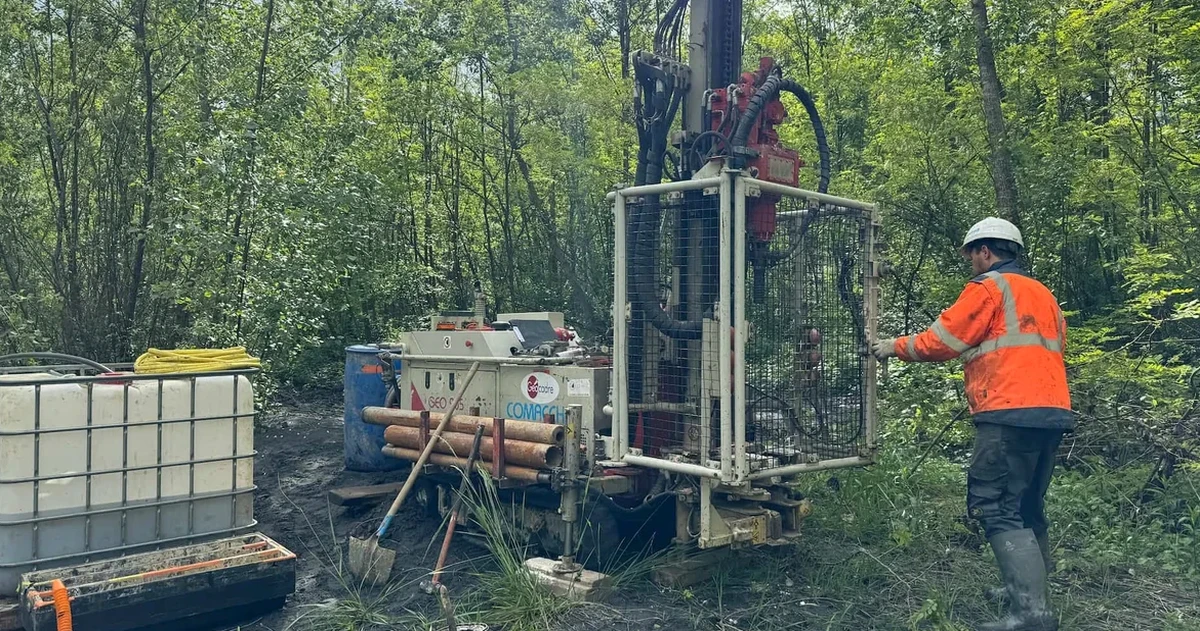
Technical details of the service in Atlanta
Typical technical challenges in Atlanta
The humid subtropical climate of Atlanta introduces a variable rarely captured by standard lab schedules: seasonal moisture fluctuation in expansive fine-grained soils. From June through September, afternoon thunderstorms can raise the groundwater table in Cobb County's alluvial deposits by several feet, softening the subgrade and triggering differential movement in slab-on-grade construction. Our laboratory addresses this by running swell-consolidation tests on remolded specimens at field moisture content, per procedures adapted from FHWA-NHI-05-037, to quantify the heave potential in the I-20 corridor's fat clays. For deep excavations near the MARTA rail lines, we also measure residual strength on slickensided samples using a Bromhead ring shear apparatus, delivering the drained friction values that govern long-term stability in over-consolidated Piedmont clay.
Our services
Our laboratory in the Atlanta metropolitan area provides the index and performance testing required to build a defensible geotechnical model. The following services form the core of our soil mechanics study workflow.
Index Property Testing and Soil Classification
We determine grain-size distribution via mechanical sieve and hydrometer analysis, coupled with Atterberg limits using a motorized Casagrande device. Each sample receives a USCS group symbol and a written description of plasticity, moisture condition, and color, forming the baseline for all subsequent engineering analyses.
Shear Strength and Compressibility Evaluation
Using triaxial cells and direct shear boxes, we measure effective stress parameters (c' and φ') for foundation bearing capacity and slope stability calculations. Consolidation tests run for a minimum of 24 hours per load increment to capture the secondary compression typical of micaceous Atlanta soils.
Compaction and Subgrade Assessment
Modified Proctor tests establish the maximum dry density and optimum moisture content for fill placement. We pair this with California Bearing Ratio (CBR) testing on soaked specimens to verify subgrade support for flexible and rigid pavement sections under GDOT specifications.
Common questions
What laboratory tests are mandatory for a soil mechanics study supporting a residential foundation permit in Atlanta?
The City of Atlanta typically requires Atterberg limits, grain-size distribution, and a moisture-density relationship (Proctor) as a minimum. If the site contains fill or soft organic soils, a consolidation test and unconfined compression may also be requested by the reviewing engineer to verify bearing capacity and settlement.
How much does a complete soil mechanics study cost for a single-family home lot in the Atlanta area?
For a standard package covering classification, compaction, and shear strength on samples from two to three borings, the laboratory component of a soil mechanics study in metro Atlanta ranges from US$3,330 to US$5,500. The final cost depends on the number of samples, depth of exploration, and whether specialized tests like triaxial or swell-consolidation are required.
How do you handle the partially weathered rock transition zone when preparing samples?
Saprolite samples are carefully trimmed in-house using a soil lathe, and we run point-load tests on the rock fragments to correlate with uniaxial compressive strength. For triaxial testing, we back-saturate the specimen under low effective stress to avoid collapsing the relict structure before shearing begins.
What turnaround time can we expect for laboratory results on a commercial project near Downtown Atlanta?
Index tests are reported within five business days. Consolidation and triaxial tests require seven to ten business days due to saturation and loading schedules. We provide preliminary shear strength parameters by email as soon as the phase reaches 70% of peak deviator stress, so foundation design can proceed without delay.