Atlanta’s subsurface is shaped by the Piedmont physiographic province: deep residual silts and sandy silts weathered from underlying granite and gneiss, often with a shallow water table perched at the soil-rock interface around 8 to 15 feet below grade. These materials lose significant strength when saturated, turning retaining wall design into a drainage exercise as much as a structural one. The IBC classifies much of the metro area within Seismic Design Category B, but slope creep and colluvium deposits in neighborhoods like Buckhead and Druid Hills introduce lateral earth pressures that generic designs simply ignore. A site-specific retaining wall design for Atlanta must account for the transition from stiff residual soil to partially weathered rock, because that contact zone is where most wall failures begin. When the wall will support a roadway or building pad, we often pair the design with a CPT test to map the exact depth of refusal without the disturbance that auger drilling causes in these sensitive silts.
A retaining wall in Atlanta fails at the drainage pipe, not at the footing: 90 percent of the problems we remediate trace back to clogged or missing weep holes.
Technical details of the service in Atlanta
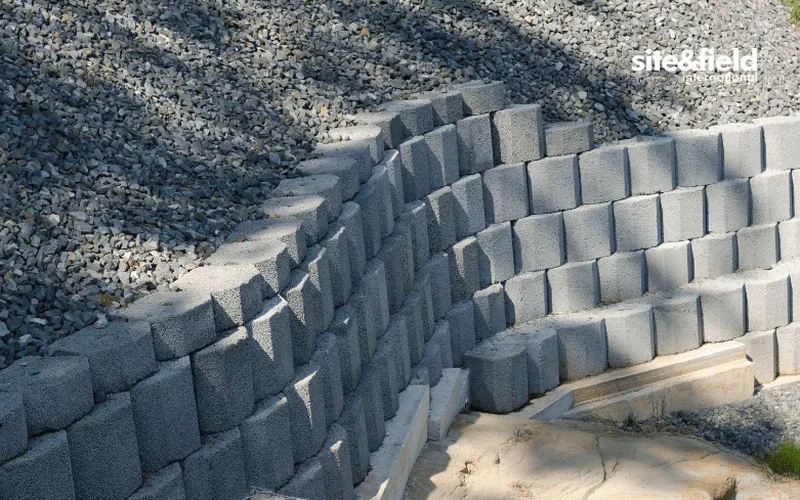
Field demonstration
Typical technical challenges in Atlanta
The most common mistake we see in Atlanta is treating a retaining wall like a fence: a contractor digs a trench, pours concrete, stacks block, and backfills with the same silty soil that came out of the hole. That wall will lean within two wet seasons. The fine-grained Piedmont residual soil holds water, expands when saturated, and exerts hydrostatic pressure that multiplies the lateral load beyond what a gravity wall can resist without a proper drainage column and weep system. A wall over four feet tall that lacks a signed and sealed geotechnical design also violates the Georgia State Minimum Standard Building Code and can halt a real estate transaction at the inspection stage. When the wall retains more than six feet or supports a surcharge from a driveway or pool deck, the risk escalates: we have investigated failures where the entire reinforced zone pulled away from the slope because global stability was never checked. The cost of a deep excavation monitoring program during construction is negligible compared to the liability of a wall that endangers the property below.
Our services
Our retaining wall design work in Atlanta covers the full lifecycle: from initial geotechnical investigation through construction-phase observation. Each scope is adapted to the site geology and the wall's purpose.
Design-Bid Support for Residential and Commercial Walls
We prepare IBC-compliant retaining wall plans with stem dimensions, reinforcement schedules, drainage details, and geotechnical notes ready for City of Atlanta or county building permit submission. The package includes the global stability model, bearing capacity verification, and a construction-phase geotechnical observation schedule.
Forensic Evaluation and Remediation Design
When an existing wall shows cracking, rotation, or water staining, we map the distress pattern, conduct test pits or CPT soundings behind the wall to identify the failure mechanism, and design a repair strategy (tiebacks, soil nail reinforcement, or replacement with improved drainage) that restores serviceability without triggering a full rebuild.
Common questions
At what height does a retaining wall require a permit and engineered design in Atlanta?
Under the Georgia State Minimum Standard Building Code (IBC with local amendments), any retaining wall over four feet in height, measured from the bottom of the footing to the top of the wall, requires a building permit and must be designed by a licensed professional engineer. Walls supporting a surcharge (driveway, pool, or building) require engineering regardless of height. The City of Atlanta and most metro counties (Fulton, DeKalb, Cobb) enforce this threshold strictly.
How do you handle the high water table common in Atlanta neighborhoods?
Drainage design is the controlling factor. We specify a continuous drainage blanket behind the wall using clean AASHTO No. 57 stone wrapped in filter fabric, a perforated collector pipe at the base, and weep holes spaced no more than 6 feet on center. For walls deeper than 8 feet, we often add a chimney drain and model the phreatic surface in the stability analysis to ensure the wall performs under saturated conditions during Atlanta's intense summer thunderstorms.
What is the typical cost range for retaining wall design in Atlanta?
For a site-specific retaining wall design package suitable for permit submission in the Atlanta metro area, the fee typically ranges from US$1,020 to US$4,630. The cost depends on wall height, complexity (surcharge loading, tiered walls, proximity to property lines), and the scope of the supporting geotechnical investigation required. A simple 5-foot garden wall on a straightforward lot will be at the lower end; a 15-foot MSE wall supporting a commercial parking lot requires more analysis and falls at the higher end.
How long does the design process take from site visit to permit-ready plans?
The typical timeline is two to three weeks after the geotechnical field data is collected. Week one covers field exploration (test pits or CPT soundings) and laboratory classification of foundation and backfill soils. Week two is the engineering phase: stability modeling, wall section design, and drainage detailing. The third week allows for internal peer review and delivery of the signed and sealed plan set. Expedited timelines are possible for smaller walls where site conditions are already well-documented.