A common mistake on Atlanta projects is assuming uniform drainage across a site just because the borehole log shows weathered rock. Saprolitic soils derived from the Piedmont bedrock, particularly in neighborhoods around Buckhead and Midtown, can shift from sandy silt to partially weathered gneiss within five vertical feet. That variability directly controls how water moves through the subsurface. A Lefranc test run in a single borehole at the wrong depth often misses a perched water layer that later floods a basement excavation on Peachtree Street. The same applies to Lugeon testing in fractured rock beneath planned retention structures. When dewatering costs spiral or grouting volumes are underestimated, the root cause is usually insufficient in-situ hydraulic conductivity data, not the drilling technique. We measure permeability at the precise depths that matter, using both constant-head and falling-head methods depending on formation response, so that contractors working in the Atlanta metro area can budget dewatering and injection with actual numbers rather than textbook assumptions. Before committing to a deep foundation design, many geotechnical engineers pair the permeability data with an SPT drilling program to correlate blow counts with fracture density in the transition zone between soil and competent rock.
Hydraulic conductivity in Atlanta saprolite can change by two orders of magnitude between the top of the soil profile and the underlying fractured gneiss.
Technical details of the service in Atlanta
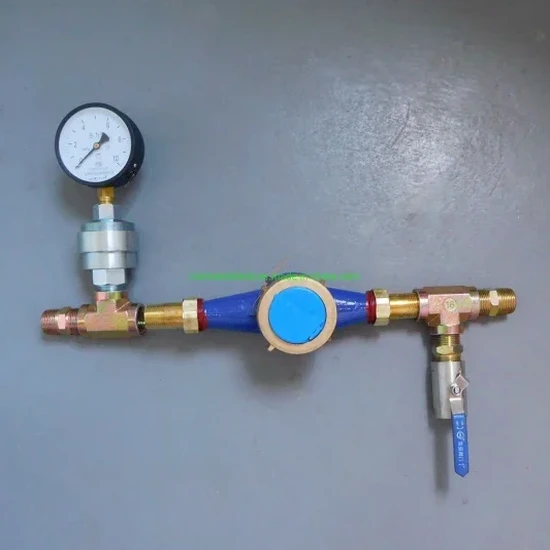
Field demonstration
Typical technical challenges in Atlanta
Atlanta’s growth since the 1990s pushed development into areas that were once considered marginal because of shallow rock and erratic groundwater. The eastern suburbs, from Decatur toward Stone Mountain, sit on a thick mantle of residual soil that can hold a perched water table well above the regional level after heavy summer thunderstorms. A deep excavation designed with a single permeability value from a shallow test frequently underperforms, leading to slope instability, sump pump overload, or uncontrolled bottom heave. In fractured crystalline rock, Lugeon values above 10 Lu indicate open, interconnected joints that may require pre-excavation grouting to prevent inflow into shafts or tunnel headings. Conversely, values below 1 Lu in the same formation often mean that drainage galleries will not function as designed. The financial impact of mischaracterized permeability in Atlanta is not theoretical: we have seen dewatering systems oversized by 40 percent because the design assumed sand-like conductivity in a clay-rich saprolite that actually drained very slowly. Getting the field test right, at the right depth, avoids that.
Our services
We run Lefranc tests in soil and highly weathered saprolite, and Lugeon tests in fractured rock, adapting the setup to Atlanta’s typical Piedmont profile. Each test program is designed after reviewing the boring logs to select stages that target the critical contact zone between residual soil and partially weathered gneiss.
Borehole Lefranc Permeability Testing
Constant-head and falling-head tests performed in uncased soil borings, typically with a 2- to 5-foot test section isolated by a slotted pipe and sand pack. We calculate hydraulic conductivity using the Hvorslev shape factor for the actual cavity geometry. This method suits the silty sands and clayey saprolite common in the Atlanta metro area.
Lugeon (Packers) Testing in Rock
Single- and double-packer injection tests in diamond-drilled NX or NQ boreholes, following ASTM D4630 and ISRM guidelines. We apply up to five pressure steps per stage to detect dilation, erosion, or void filling. Results are reported in Lugeon units and used directly for grouting design, tunnel inflow estimates, and dam foundation assessment.
Common questions
How much does a field permeability test cost in Atlanta?
A single Lefranc or Lugeon test stage in the Atlanta area typically ranges from US$560 to US$1,180, depending on the number of stages, borehole depth, and whether a packer assembly must be mobilized. The final cost reflects the test setup time, digital data acquisition, and the engineering report that interprets the results for your specific project.
When should we choose a Lugeon test instead of a Lefranc test?
A Lugeon test is the correct choice when the target zone is fractured rock with low matrix porosity, particularly if the project involves a dam foundation, a deep tunnel, or a grouting program. A Lefranc test is better suited for soil, highly weathered saprolite, or the transition zone where the material still behaves as a granular medium rather than a discontinuous rock mass. In many Atlanta boreholes, both methods are applied at different depths in the same hole.
How many test stages do we need for a typical Atlanta site?
The number of stages depends on the stratigraphy. A site with 30 feet of saprolite overlying gneiss often requires two Lefranc stages in the soil and two to three Lugeon stages in the upper rock, spaced every 10 feet. The goal is to capture the permeability contrast at the soil-rock interface, which is where most groundwater problems in Atlanta excavations originate.
How long does a field permeability test take?
A single Lefranc test, including setup and recovery monitoring, typically takes one to two hours. A Lugeon test with five pressure steps per stage requires approximately two to three hours per stage. Most Atlanta test programs are completed in one to two field days, with the final report delivered within a week.