IBC Section 1810 and AASHTO LRFD Section 11 govern anchor design in Georgia, but Atlanta's Piedmont residual soils add a layer of complexity that textbook assumptions miss. Saprolite grades can shift from stiff silt to micaceous sand within five vertical feet, and bond stress values published for uniform rock or clean sand simply do not apply here. We design active anchors for post-tensioned tieback walls along Midtown excavations and passive systems for gravity wall deadmen in Buckhead, verifying pullout capacity with full-scale proof tests. The CPT test provides continuous tip resistance and sleeve friction logs that help us map the saprolite-to-rock transition, while retaining wall design often depends on anchor preload to limit lateral deflection below the 1-inch threshold that neighboring property owners demand.
We bond-stress-verify every anchor in Atlanta's saprolite using pullout tests — no generic rock-socket tables, just local proof data.
Technical details of the service in Atlanta
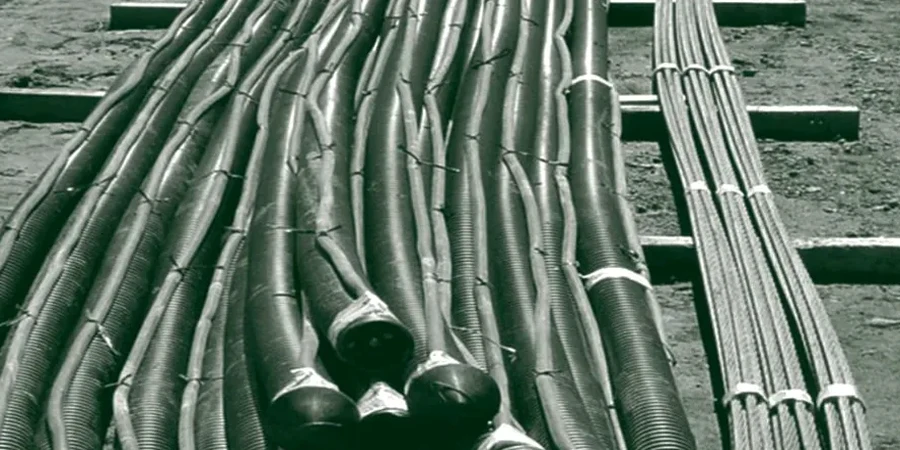
Field demonstration
Typical technical challenges in Atlanta
Atlanta's 2021 population surpassed 498,000, and the city is adding mid-rise structures at a pace that pushes excavation shoring right up against property lines in neighborhoods from Old Fourth Ward to West Midtown. A single anchor failure can translate into a 2-inch wall movement, cracking adjacent foundations and triggering costly litigation. Saprolite contains relic joints that act as seepage paths during summer thunderstorms, and groundwater softening reduces bond stress by 30 to 50 percent within hours. We require sacrificial load tests on at least 5 percent of production anchors when the site is within 200 feet of occupied buildings, and we monitor lift-off tests after lock-off to catch creep before it cascades. The IBC mandates a safety factor of 2.0 on ultimate bond for permanent anchors; exceeding that minimum by 20 percent adds negligible cost compared to a shoring failure.
Our services
Our anchor design scope in metro Atlanta covers the full chain: site investigation planning, design calculations with stamped drawings, and field testing oversight.
Active tieback design
Post-tensioned strand anchors for soldier pile and secant pile walls, with lock-off sequences, load-cell monitoring, and bonded-length verification via load-transfer models calibrated to SPT and CPT data.
Passive deadman and block anchors
Non-stressed systems for gravity and cantilever walls, sized for passive wedge resistance in saprolite and partially weathered rock, with global stability integration.
Proof testing and QA/QC supervision
Performance, proof, and creep tests per FHWA criteria; we supervise jacking, record dial-gauge readings, and sign off on lock-off acceptance before the wall backfill proceeds.
Common questions
What is the difference between an active and a passive anchor in a retaining wall?
An active anchor is post-tensioned after grouting — we pull it to 100–133 percent of design load, then lock it off so the wall is pre-compressed against the soil. A passive anchor develops force only when the wall moves enough to stretch the tendon, so it relies on deformation rather than preload. In Atlanta's saprolite, active systems let us hold lateral movement under 0.5 inches, which is critical when the adjacent lot has a 1920s brick foundation.
How much does an anchor design package cost for a project in Atlanta?
The design package — including geotechnical review, anchor sizing, bonded/unbonded length calculations, stamped drawings, and proof-test specifications — runs between US$970 and US$3,410 depending on wall length, number of anchor rows, and whether we are also handling the global stability analysis.
Which load tests are required for permanent tieback anchors in Georgia?
IBC Section 1810 references FHWA-RD-97 and PTI DC-35, which call for performance tests on at least two anchors at the start of the job, proof tests on every production anchor, and creep tests at each step. We hold load increments for 10 minutes and require creep below 1 millimeter; anything higher triggers a design review before lock-off.
How does Atlanta's saprolite affect grout-to-ground bond strength?
Saprolite retains the fabric of the parent rock but has zero cohesion when saturated, so bond stress values from rock tables do not apply. We estimate ultimate bond from local SPT N-values and confirm with sacrificial pullout tests. In Midtown, we have measured ultimate bond between 30 and 60 psi in silty saprolite, but values drop fast if water is present during grouting.