ASTM D4318-17e1 defines the procedure, but applying it correctly to Georgia’s Piedmont residual soils demands local experience. In Atlanta, we routinely encounter silty sands and low-plasticity clays derived from in-place weathering of schist and gneiss, materials that behave very differently from transported alluvial deposits. The liquid limit and plastic limit tests provide the fundamental parameters for classifying these soils under the Unified Soil Classification System, directly influencing foundation design, slope stability analysis, and pavement subgrade evaluation. A plasticity index measured in a Midtown project will often differ from one in Sandy Springs, not because of lab error but because of subtle variations in mica content and weathering grade. We frequently pair this analysis with grain size distribution to confirm the full textural profile, especially when silt percentages straddle classification boundaries.
The plasticity index of Atlanta's residual soils is the single best predictor of shrink-swell behavior, a critical factor for slab-on-grade construction across the metro area.
Technical details of the service in Atlanta
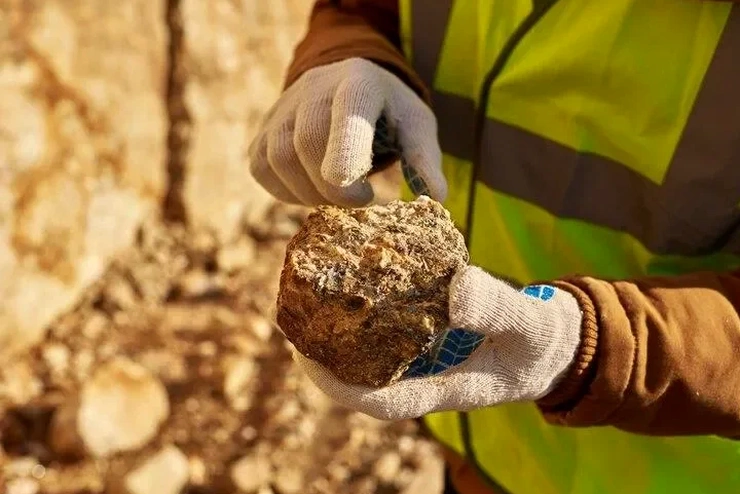
Field demonstration
Typical technical challenges in Atlanta
Our Atlanta lab uses brass Casagrande cups with a hard rubber base meeting the ASTM resilience specification, checked weekly for wear on the grooving tool tip. The technician records the exact number of blows for each closure, plots the flow curve on semi-log paper, and determines the liquid limit at 25 blows. Most errors in Atterberg testing originate from incomplete hydration of the soil paste; Piedmont saprolites with high mica content require a minimum 16-hour curing period before testing, longer than the standard overnight soak for many other soils. We verify plastic limit results by running duplicate determinations and comparing the average moisture content. When the liquid limit exceeds 50, we automatically flag the material for potential high-volume-change behavior, triggering a recommendation for swell testing in accordance with ASTM D4546.
Our services
Our Atlanta soil laboratory provides a full suite of index property testing designed around the specific challenges of Piedmont geology. Each test package includes detailed reporting with flow curves and classification charts.
Full Atterberg Suite
Liquid limit by multipoint Casagrande method, plastic limit, and plasticity index calculation. Includes natural moisture content for liquidity index determination.
Combined Index Package
Atterberg limits plus hydrometer and sieve analysis for complete particle-size distribution. Recommended for USCS classification of borderline silt-clay mixtures common in Atlanta's decomposed rock.
Shrink-Swell Screening
Plasticity index evaluation correlated to the expansive potential classification chart from the IBC. Used to determine if a site in DeKalb or Fulton County requires specialized foundation treatment.
Common questions
What is the cost of Atterberg limit testing for a single soil sample in Atlanta?
The standard fee for a complete Atterberg limits determination, including liquid limit by multipoint method, plastic limit, and plasticity index, ranges from US$60 to US$100 per sample. The final cost depends on the number of points run for the flow curve and whether expedited turnaround is requested.
How long does it take to receive results from an Atterberg limits test?
Standard turnaround is three to five business days from sample receipt. This includes the mandatory 16-hour minimum hydration period we enforce for Piedmont residual soils, which often contain partially dehydrated mica. Expedited processing can reduce the total time to two business days for time-sensitive construction decisions.
Why do Atterberg limits matter for construction on Atlanta's red clay?
Atlanta's reddish-brown residual soils, formed from weathered felsic gneiss, can exhibit significant volume change with moisture fluctuation. The plasticity index derived from Atterberg limits quantifies this potential. A PI above 25 typically indicates expansive behavior, requiring considerations for slab-on-grade design such as moisture-conditioned subgrade or void forms beneath structural floors.
What sample quantity is required for Atterberg testing?
We require approximately 300 grams of material passing the No. 40 sieve. For disturbed samples from test pits or SPT split spoons, the field technician should seal the sample in an airtight bag immediately after collection to preserve the natural moisture content, which is critical for computing the liquidity index.