The Piedmont residual soils of Atlanta demand a foundation design approach that accounts for highly variable weathering profiles. A shallow bearing stratum may transition to partially weathered rock within a few vertical feet, creating differential settlement risks that generic prescriptive designs routinely miss. Our team integrates site-specific subsurface data with IBC Chapter 18 bearing capacity models to deliver shallow foundation designs that work with the natural profile rather than against it. For projects on the north side near Buckhead or along the Chattahoochee River corridor, the contrast between dense saprolite and softer alluvial pockets can be stark. We resolve this through targeted test pit investigations that map the soil-rock interface with the precision that standard borings alone cannot provide.
A shallow footing on Piedmont residual soil can carry 3 to 5 ksf safely when the bearing stratum is properly identified and protected from moisture fluctuation.
Technical details of the service in Atlanta
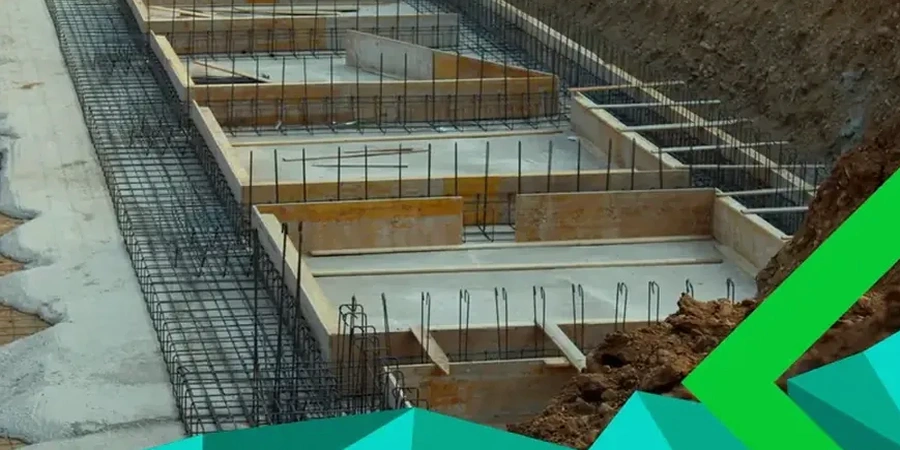
Typical technical challenges in Atlanta
Geologic mapping by the USGS shows Atlanta straddling the Brevard Fault Zone, a broad corridor of sheared and altered metamorphic rock that runs northeast from Alabama through the metro area. Within this zone, saprolite can preserve relict foliation and behave like a drained granular soil in cut slopes but like a cohesive material under confined compression. The shallow water table in low-lying neighborhoods such as Peachtree Creek and South Atlanta introduces additional complexity: a footing bearing on micaceous silt can lose 30 to 50 percent of its undrained strength after saturation from a heavy summer storm event. We evaluate seasonal groundwater fluctuation by installing standpipe piezometers during the exploration phase and by running consolidated-undrained triaxial tests on samples trimmed from the proposed bearing elevation. Ignoring these local hydrologic factors leads to the kind of post-construction settlement that shows up as stair-step cracking in brick veneer within the first two years.
Our services
We provide shallow foundation design packages that move from field exploration through final bearing capacity and settlement calculations. Every deliverable is stamped by a Georgia-licensed professional engineer and includes construction-phase observation recommendations.
Spread Footing Design
Bearing capacity and settlement analysis for isolated and continuous footings. We size reinforcement using ACI 318 and check punching shear for column loads up to 400 kips on Piedmont residual profiles.
Mat Foundation Analysis
Rigid and flexible mat solutions for poor near-surface soils or high column density. We model soil-structure interaction using modulus of subgrade reaction calibrated to field plate load tests or SPT correlations.
Ground Improvement for Shallow Foundations
Design of compacted aggregate piers or controlled modulus columns to stiffen the upper bearing zone, reducing total settlement to under 1 inch for allowable bearing pressures up to 6 ksf.
Common questions
What site information do you need to start a shallow foundation design in Atlanta?
We need a geotechnical exploration report with SPT N-values, laboratory classification and strength test results, and a site plan showing proposed column loads and locations. If no exploration exists, we can scope and execute the drilling and lab program ourselves under one contract.
How deep do footings need to be in Georgia per code?
IBC 1809.4 requires a minimum embedment of 12 inches below undisturbed ground surface. In Atlanta's Piedmont region we typically recommend 18 to 24 inches to get below the active moisture-fluctuation zone where expansive clay behavior can occur in the shallow weathered horizon.
Can you design a shallow foundation on fill material?
Yes, provided the fill is engineered and documented. For undocumented fill we perform test pits and SPT borings to characterize thickness and consistency, then evaluate whether removal and replacement or ground improvement such as aggregate piers is the more cost-effective path to achieving the required bearing capacity.
What does shallow foundation design cost for a typical Atlanta residential project?
For a single-family residential project with a site exploration already completed, the design fee ranges from US$2.140 to US$3.030 depending on the complexity of the subsurface conditions and the number of footing types. This includes bearing capacity calculations, settlement analysis, and a stamped design report with construction recommendations.
How do you verify bearing capacity during construction?
We perform proof-rolling and visual inspection of the bearing stratum at footing subgrade elevation, supplemented by hand penetrometer or dynamic cone penetrometer testing at selected locations. If the exposed material differs from what the exploration predicted, we adjust the design on-site before concrete placement.