Contractors working in Buckhead versus those out in South Fulton know one thing for sure: the ground never behaves the same way twice. The red clay of the Piedmont in Buckhead compacts differently than the mixed alluvial soils near the Chattahoochee River. That difference decides whether your pavement holds up or fails early. A proper Proctor test in Atlanta removes that guesswork. It gives you the exact moisture-density curve for your site’s specific fill. We run both Standard Proctor and Modified Proctor at our accredited lab. The numbers you get back are the numbers you build on. For sites near the airport with deeper sand lenses, we often pair the Proctor with sand cone density field checks to confirm the compaction crew is actually hitting spec before the inspector arrives.
A single Proctor curve from your actual borrow source prevents more callbacks than a hundred verbal assurances from the fill crew.
Technical details of the service in Atlanta
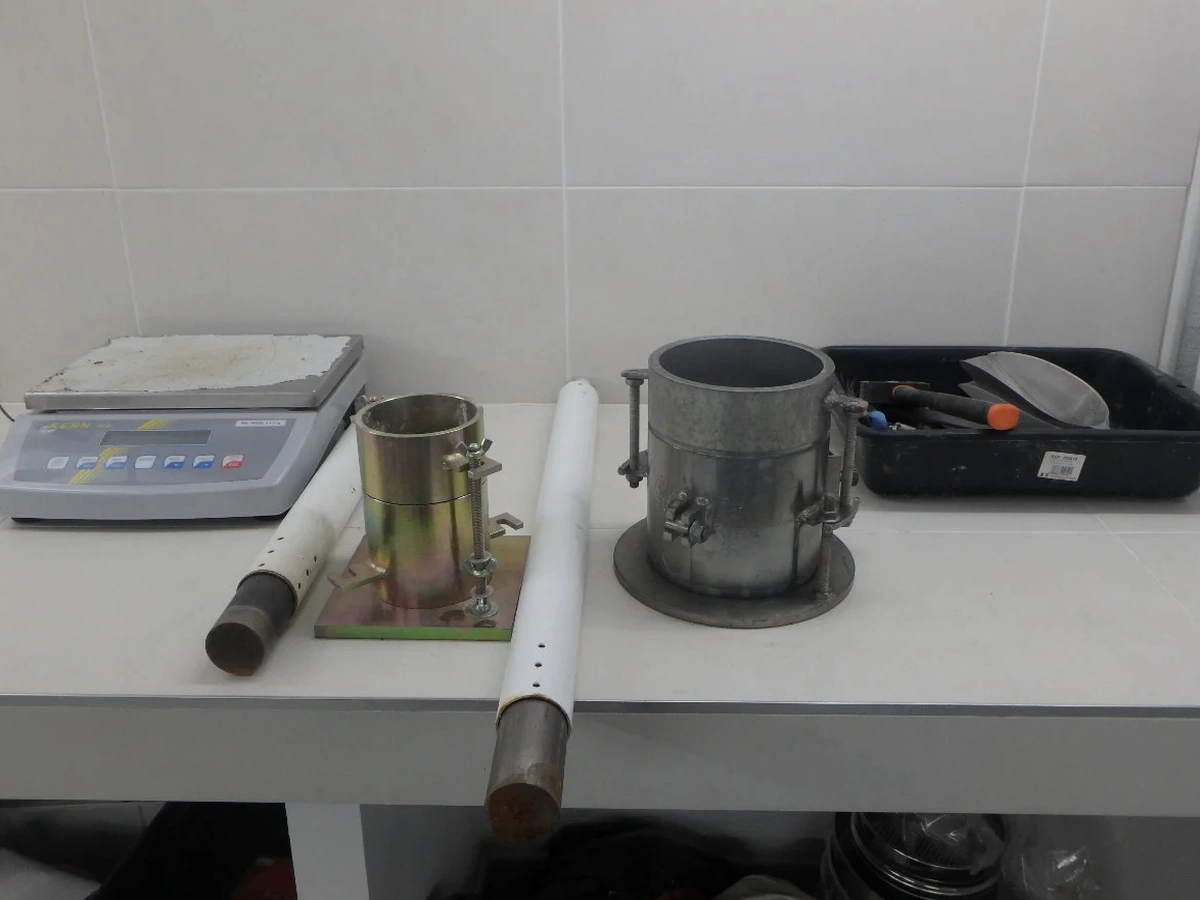
Typical technical challenges in Atlanta
The automated Proctor hammer in our Atlanta lab delivers 25 blows per layer with a controlled drop height, every single time. No manual variation. No “close enough” counts. That mechanical consistency matters because a 1% error in dry density can translate to thousands of dollars in rework when the nuclear gauge fails the field check. Atlanta’s summer humidity also plays a role; we condition samples in a controlled environment so your optimum moisture value reflects actual field conditions, not a dry winter lab. If your project requires a Modified Proctor for heavy traffic pavements on I-20 corridors or warehouse floors in the Fulton Industrial area, we run the higher 56,000 ft-lbf/ft³ effort with the same repeatable rigor.
Our services
Our Atlanta Proctor testing supports your project from borrow pit to final lift certification. We deliver the lab data and the field correlation you need.
Standard Proctor Test
ASTM D698 compaction curve for light-duty fill, landscaping, and utility trenches in the Atlanta metro area.
Modified Proctor Test
ASTM D1557 compaction curve for structural fill, road base, and heavy-loaded slabs in Georgia commercial construction.
Field Compaction Correlation
We tie your Proctor curve to sand cone or nuclear gauge field results so the inspector sees a unified compliance package.
Common questions
How much does a Proctor test cost in Atlanta?
A Standard or Modified Proctor test typically ranges from US$100 to US$200 per sample in the Atlanta market, depending on the number of points on the curve and required turnaround time.
How long does it take to get results?
Standard turnaround is 24 to 48 hours. We can expedite same-day results for active grading operations on sites like the Perimeter Center area where downtime costs are high.
Do I need Standard or Modified Proctor for my project?
Standard Proctor suits landscaping and shallow utility trenches. Modified Proctor is required for structural fill under footings, slabs, and pavements per IBC and GDOT specifications.
Can you test my borrow material before I bring it on site?
Yes. Bring us a sample from your borrow pit and we will produce the complete moisture-density curve so your compaction specs are locked before the first truck arrives.