Slopes and walls represent a critical intersection of geotechnical engineering and structural design, forming the backbone of safe land development across Atlanta's variable terrain. This category encompasses the analysis, design, and stabilization of both natural and engineered earth structures, including retaining walls, reinforced slopes, and anchored systems. In a city defined by the foothills of the Appalachian Piedmont, where elevation changes of 50 to 100 feet are common within single parcels, the integrity of these systems directly impacts public safety, infrastructure longevity, and property value. From preventing landslides along the Chattahoochee River bluffs to enabling deep basements in Midtown high-rises, the discipline addresses the fundamental challenge of holding back earth in a landscape that is never truly flat.
Atlanta's subsurface conditions present unique challenges that demand specialized local expertise. The region is underlain predominantly by the Piedmont residual soils—silty sands and sandy silts derived from the in-place weathering of granite and gneiss bedrock. These soils, classified under the Unified Soil Classification System as SM, ML, or MH materials, exhibit significant variability in strength and drainage characteristics over short distances. The depth to partially weathered rock (PWR) and competent bedrock can range from 10 to over 60 feet, creating complex groundwater regimes and potential slip planes. The presence of expansive clay seams and the city's average annual rainfall of 50 inches further complicate stability, as pore-water pressure buildup remains a primary trigger for slope failures in the metro area.
Regulatory compliance in Atlanta operates under the Georgia State Minimum Standard Codes, which adopt the International Building Code (IBC) with local amendments. Chapter 18 of the IBC governs soils and foundations, while earth retaining structures must satisfy the lateral earth pressure requirements of Section 1610. For slopes, the Georgia Soil and Water Conservation Commission's Manual for Erosion and Sediment Control in Georgia provides mandatory guidelines for temporary and permanent stabilization. Crucially, any engineered slope or wall exceeding four feet in height typically requires a design sealed by a Georgia-licensed Professional Engineer, with submittals reviewed by local jurisdictions such as the City of Atlanta's Office of Buildings or the respective county's development services department.
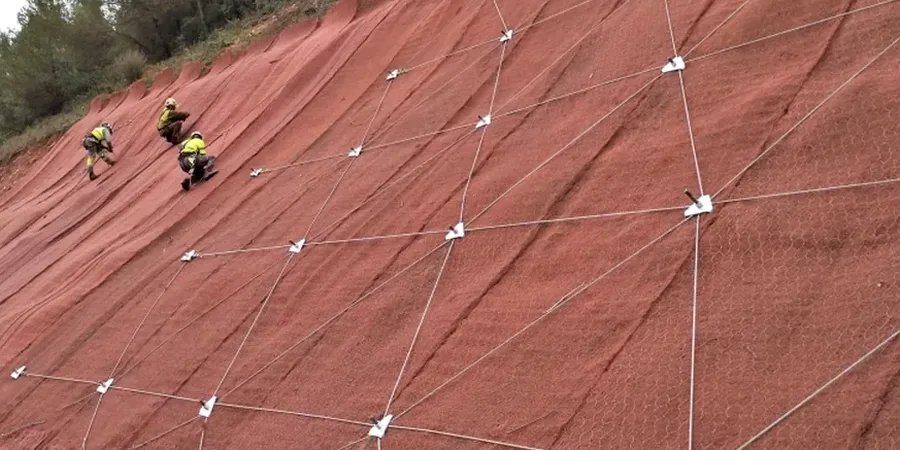
The practical applications of slope and wall engineering in Atlanta span a diverse project spectrum. Steep residential lots in neighborhoods like Buckhead and Druid Hills routinely necessitate retaining wall design to create usable backyards or pool terraces. Commercial developments along the GA-400 corridor frequently require tied-back soldier pile walls for deep excavations adjacent to existing structures. Infrastructure projects, including the Atlanta BeltLine and MARTA expansions, depend on rigorous slope stability analysis to protect transit corridors from soil creep and surficial failures. For cut situations where space constraints are severe and lateral movement must be minimized, active/passive anchor design provides a high-capacity solution that extends beyond traditional gravity or cantilever wall limits.
Common questions
What is the difference between a slope stability analysis and a retaining wall design?
Slope stability analysis evaluates the safety factor of an existing or proposed soil or rock slope against rotational, translational, or wedge-type failures, focusing on the global mass. Retaining wall design is a structural engineering process that sizes a constructed element to resist lateral earth pressures, addressing internal bending, shear, and external overturning and sliding. While distinct, the two are often integrated, as a wall may be required to stabilize a slope that lacks sufficient natural stability.
When does a project in Atlanta require a geotechnical investigation for slopes or walls?
A geotechnical investigation is mandatory under the IBC when a retaining wall supports more than four feet of unbalanced fill or when a slope exceeds a 2:1 (horizontal to vertical) inclination and poses a risk to structures. In Atlanta, the permitting authority will typically require a soil boring program, laboratory strength testing, and a sealed engineering report before approving plans for any permanent earth retention system or slope modification on a commercial or subdivided residential lot.
How do Atlanta's Piedmont residual soils affect the choice of a retaining wall system?
Piedmont residual soils often contain significant silt and mica content, which can reduce drained friction angles and make them sensitive to construction disturbance and water. This favors flexible systems like segmental block walls with geogrid reinforcement or anchored soldier pile walls that can accommodate minor settlements. Gravity walls relying solely on mass may require deeper embedment to reach more competent material, as near-surface horizons in Atlanta are frequently loose to medium-dense residual silty sands.
What role does water management play in the long-term performance of engineered slopes and walls in Atlanta?
Water management is the single most critical factor for long-term performance in Atlanta's high-rainfall environment. Ninety percent of local wall and slope failures are precipitated by uncontrolled surface runoff or elevated groundwater. A robust design must include a subsurface drainage system—typically a gravel chimney drain with a perforated collector pipe—behind every retaining structure, combined with surface swales or downspout tie-ins to intercept and divert stormwater away from the stabilized earth mass.