The 2024 edition of the IBC, adopted by the City of Atlanta with local amendments, sets clear performance expectations for ground improvement in seismic site classes D and E. For deep deposits of loose sand or uncontrolled fill—common in the Chattahoochee River corridor and in redeveloped industrial parcels south of I-20—vibrocompaction design becomes a requirement rather than an option. The technique uses a vibrating probe to densify granular material at depth, reducing the risk of settlement and improving bearing capacity without removing the soil mass. In Atlanta’s Piedmont geology, where residual silty sands overlie partially weathered rock, the design must account for variable depth to refusal and the presence of micaceous layers that affect compaction efficiency. Our technical team correlates field data from SPT drilling and CPT soundings to establish baseline relative density, then defines probe spacing, frequency, and duration to meet the target performance criteria specified in the geotechnical report.
Vibrocompaction can increase SPT N-values from single digits to over 25 in clean sands, transforming a marginal site into a buildable platform without deep foundations.
Technical details of the service in Atlanta
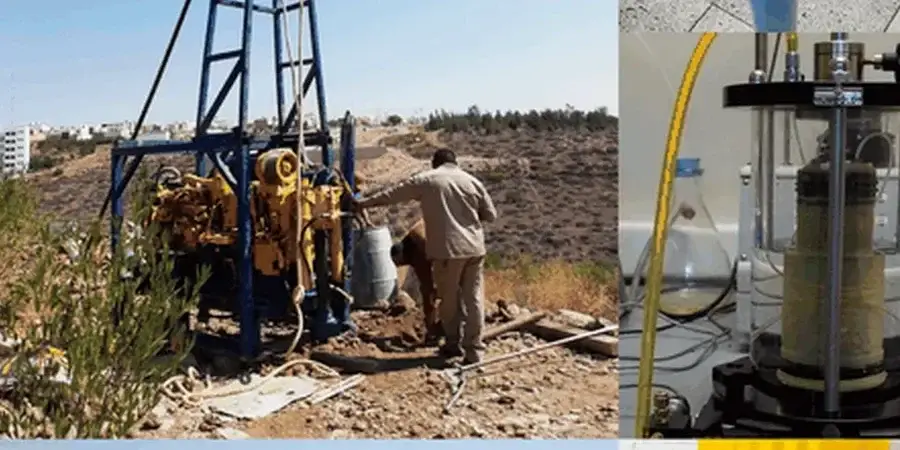
Typical technical challenges in Atlanta
Atlanta’s summer thunderstorm season—June through August—brings intense, short-duration rainfall that can saturate the upper soil profile in under an hour. This creates a practical headache for vibrocompaction operations: water-saturated sands may liquefy locally around the probe, reducing energy transfer to the surrounding soil and leaving untreated zones if the design doesn't compensate with tighter spacing or longer dwell time at depth. The Piedmont geology adds another layer of complexity; the transition from soil to weathered rock can be abrupt and highly irregular across a single lot. A vibrocompaction design that doesn't map refusal depth with adequate borehole coverage—typically a grid no coarser than 50 feet for commercial structures—risks leaving columns of untreated material in pockets where the probe couldn't reach target depth. The 2022 edition of ASCE 7-22, referenced by the Georgia State Minimum Standard Building Code, requires that ground improvement designs for seismic site classes D and E demonstrate post-treatment performance through in-situ testing, not just theoretical energy-based correlations.
Our services
The vibrocompaction package includes design deliverables and field verification. The design phase produces a specification-ready document; the verification phase confirms that the installed ground meets the performance benchmarks.
Vibrocompaction Design Package
Complete design report with probe layout, grid geometry, energy settings, and acceptance criteria. Includes liquefaction analysis per NCEER/Youd-Idriss method, settlement estimates under design loads, and a construction sequencing plan coordinated with earthwork operations.
Post-Compaction Verification Testing
SPT and CPT field program executed within 48-72 hours of probe completion. Reports compare pre- and post-treatment N-values and tip resistance, include statistical analysis of relative density improvement, and issue a signed compliance letter for the building permit record.
Common questions
What soil conditions in Atlanta make vibrocompaction the right choice over stone columns or rigid inclusions?
Vibrocompaction works best in clean granular soils with less than 15 percent fines—think alluvial sands along the Chattahoochee River or decomposed granite sands found in parts of the Piedmont. If the fines fraction creeps above that threshold, the vibratory energy doesn't transmit well and stone columns often become the more reliable choice. A quick grain-size analysis from the site investigation gives us the answer; the design decision hinges on that sieve data plus the depth of the loose layer.
How long does the design and approval process take for a typical commercial building in the City of Atlanta?
The design phase runs about two to three weeks once the geotechnical investigation data is in hand—that includes the liquefaction analysis, grid layout, and construction spec. City of Atlanta plan review typically adds another two weeks for the ground improvement submittal, assuming it's part of the full building permit package. The field work itself moves fast; a crew can treat 3,000 to 5,000 square feet per day with a single rig, so most commercial footprints wrap up in under a week.
What is the typical cost range for vibrocompaction design and verification in the Atlanta market?
For a standard commercial lot under 20,000 square feet, the design plus post-compaction verification testing generally falls between US$1,380 and US$5,960, depending on the number of probe points, the depth of treatment, and how many verification borings the plan reviewer requires. Larger industrial sites with complex subsurface conditions will trend toward the upper end or beyond, especially if pre-production test sections are needed to calibrate the probe settings.
Does vibrocompaction eliminate the need for deep foundations in Atlanta's Piedmont residual soils?
It can, but it depends entirely on the depth to competent rock and the structural loads. Vibrocompaction improves the upper granular layer—typically down to 40 or 50 feet—but if the residual soil transitions to a stiff saprolite at 25 feet and the column loads exceed 300 kips, a mat foundation on treated ground might still need to be checked against the deeper bearing layer. The design report includes a comparative analysis so the structural engineer can decide whether a shallow footing on densified soil is sufficient or if piles are unavoidable.